Vector Database for RAG (The Top 10 to Know in 2026)
Last Updated on June 25, 2026 by Editorial Team
Author(s): Asad Iqbal
Originally published on Towards AI.
Qdrant alternatives, including local + open source vector db
If you are not a premium Medium member, read the full guide FREE here and consider joining medium to read more such guides.
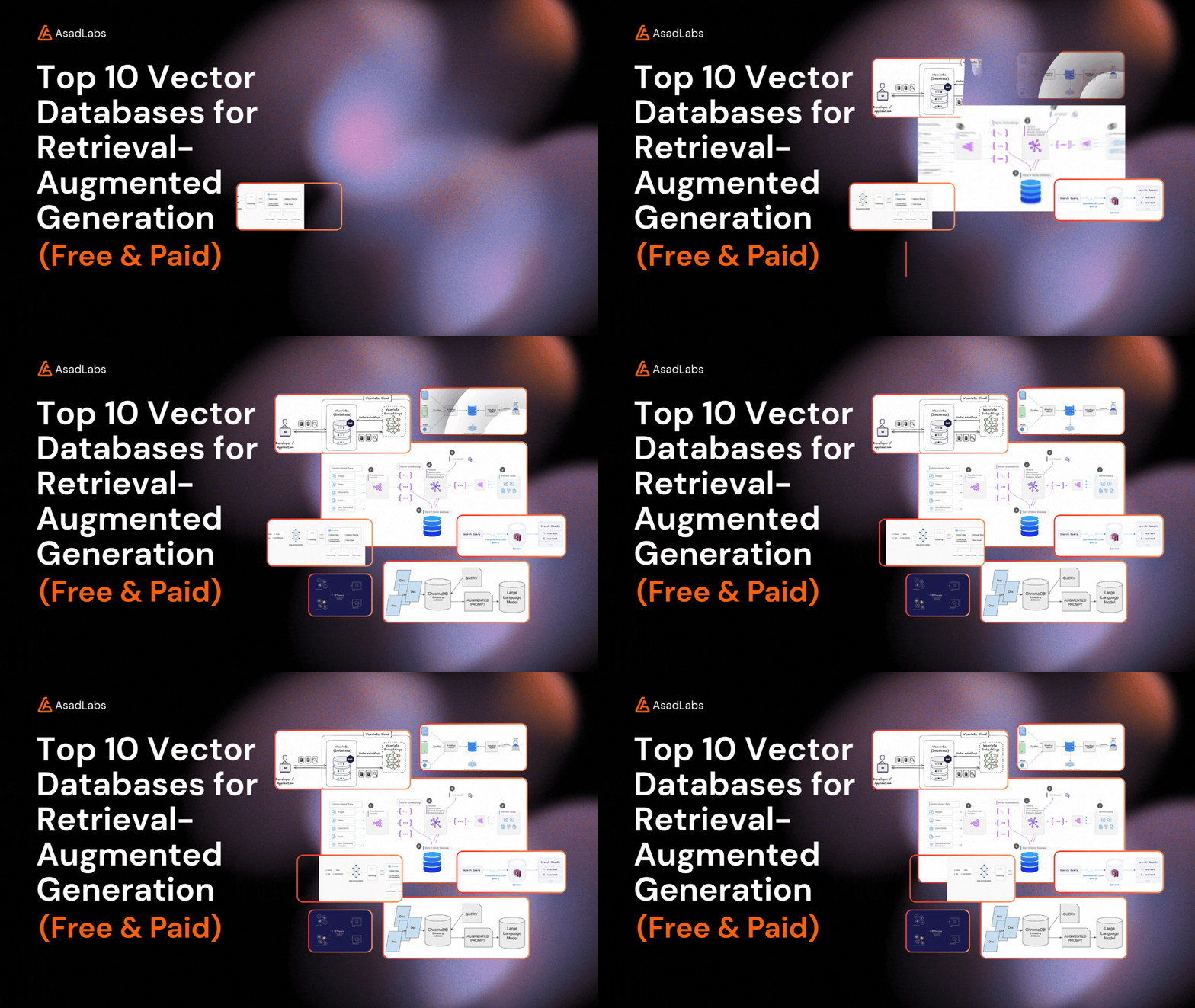
The article explains why vector databases are the core retrieval infrastructure behind RAG systems, how they function (semantic embedding similarity plus ANN indexing and metadata-aware search), and the main criteria teams should evaluate such as retrieval quality/latency, filtering, integrations, and operational readiness. It then compares leading options—both free/open source (e.g., Chroma, Milvus, Qdrant, Weaviate, pgvector) and paid/managed (e.g., Pinecone, plus other managed approaches)—highlighting what each is best for in terms of scale, deployment style, filtering capabilities, and tradeoffs. Finally, it covers limitations of standard vector-based RAG (context loss, semantic imprecision, and costly embedding updates) and points toward emerging alternatives like Graph RAG and vectorless approaches, ending with a practical decision framework based on scale, cost shape, reasoning needs, and existing stack.
Read the full blog for free on Medium.
Join thousands of data leaders on the AI newsletter. Join over 80,000 subscribers and keep up to date with the latest developments in AI. From research to projects and ideas. If you are building an AI startup, an AI-related product, or a service, we invite you to consider becoming a sponsor.
Published via Towards AI
Towards AI Academy
We Build Enterprise-Grade AI. We'll Teach You to Master It Too.
15 engineers. 100,000+ students. Towards AI Academy teaches what actually survives production.
Start free — no commitment:
→ 6-Day Agentic AI Engineering Email Guide — one practical lesson per day
→ Agents Architecture Cheatsheet — 3 years of architecture decisions in 6 pages
Our courses:
→ AI Engineering Certification — 90+ lessons from project selection to deployed product. The most comprehensive practical LLM course out there.
→ Agent Engineering Course — Hands on with production agent architectures, memory, routing, and eval frameworks — built from real enterprise engagements.
→ AI for Work — Understand, evaluate, and apply AI for complex work tasks.
Note: Article content contains the views of the contributing authors and not Towards AI.
Related posts
Recent Posts