
What is Visual Prompting?
Last Updated on July 20, 2026 by Editorial Team
Author(s): ML Point
Originally published on Towards AI.
Introduction
The widespread adoption of LLMs solidified prompting as the standard interface between users and foundation models. At first, prompts were strictly text-based instructions in natural language used to guide a model’s underlying reasoning. The introduction of multimodal foundation models fundamentally disrupted this paradigm. Visuals like images, documents, and user interfaces are no longer just things models look at, they are now an active part of the instruction itself.
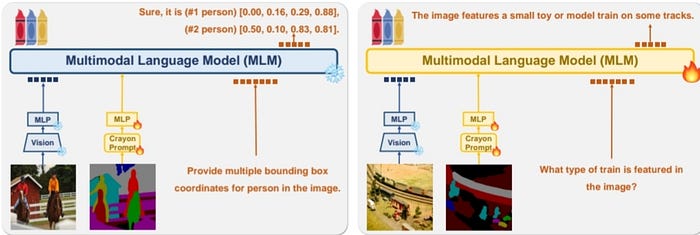
After defining visual prompting, the article explains why it’s needed for multimodal models: language is too lossy for spatial references, so visual context helps ground instructions and reduce ambiguity. It frames visual prompting as a shift in interaction paradigm—from modality-specific systems toward multimodal intelligence—then provides a formal definition focused on intentionally constructing visual context to condition inference toward a desired reasoning objective. It distinguishes visual prompting from generic image input, emphasizing that designing visual context (e.g., annotations, region selection, attention constraints) guides reasoning rather than simply supplying data. The piece also outlines the computational pipeline and how visual inputs shape intermediate representations, describes visual prompting as an information constraint that defines and narrows a model’s search space, and lays out core design principles like semantic alignment, spatial grounding, attention guidance, context preservation, information density, and instruction consistency. It proposes a taxonomy of approaches (referential, comparative, demonstration, constraint, contextual, and sequential prompting), relates visual prompting to broader multimodal prompt engineering, and discusses failure modes such as ambiguity, poor quality, annotation errors, conflicting instructions, missing context, occlusion, domain shift, and hallucinations that remain possible despite grounding. Finally, it surveys applications beyond computer vision, highlights research challenges (scalable context, fine-grained spatial/compositional reasoning, uncertainty calibration, explainable attention, continual learning, benchmark standardization, robustness, efficient inference, and tool integration), and looks ahead to a future where prompting is evidence design across modalities for intent-centric interaction.
Read the full blog for free on Medium.
Join thousands of data leaders on the AI newsletter. Join over 80,000 subscribers and keep up to date with the latest developments in AI. From research to projects and ideas. If you are building an AI startup, an AI-related product, or a service, we invite you to consider becoming a sponsor.
Published via Towards AI
Towards AI Academy
We Build Enterprise-Grade AI. We'll Teach You to Master It Too.
15 engineers. 100,000+ students. Towards AI Academy teaches what actually survives production.
Start free — no commitment:
→ 6-Day Agentic AI Engineering Email Guide — one practical lesson per day
→ Agents Architecture Cheatsheet — 3 years of architecture decisions in 6 pages
Our courses:
→ AI Engineering Certification — 90+ lessons from project selection to deployed product. The most comprehensive practical LLM course out there.
→ Agent Engineering Course — Hands on with production agent architectures, memory, routing, and eval frameworks — built from real enterprise engagements.
→ AI for Work — Understand, evaluate, and apply AI for complex work tasks.
Note: Article content contains the views of the contributing authors and not Towards AI.
Related posts
Recent Posts